
Race, Space, and Power in Gentrifying Brooklyn
Located at the nexus of African American history, critical geography, urban history, and cultural studies, Boston’s project explores the racial operations of post-1970 gentrification in Brooklyn, New York. In it, she links the history of race and structural racism in Brooklyn and the rise of neoliberalism and colorblind racial ideology to the cumulative vulnerabilities of black residents of gentrifying neighborhoods. Boston’s analysis of gentrification's consequences for black Brooklynites links struggles for spatial control to struggles over racial control and self-determination. The exclusionary restructuring of urban space sheds light on the nature of the contemporary fragility of black communities, and has implications that extend far beyond the confines of a single borough.
Due to limited space this event is restricted to NYU faculty, research staff, and gradtuate students. To RSVP please email marron.institute@nyu.edu.
Speakers
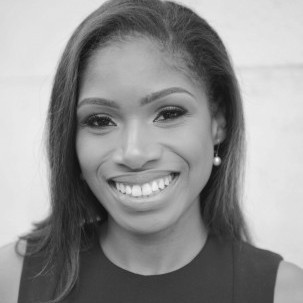
Assistant Professor/Faculty Fellow / Marron Institute
Amanda Boston is a Provost’s Postdoctoral Fellow and an Assistant Professor/Faculty Fellow at the Marron Institute of Urban Management. She holds a Ph.D. and an M.A. in Africana Studies from Brown University, as well as an M.A. in Political Science and a B.A. in Political Science and African & African American Studies from Duke University.
Amanda’s research, writing, and teaching focus on twentieth-century African American history, politics, and culture, with an emphasis on the politics and culture of race in the post-civil rights era. Her current projects combine these interests, and explore gentrification’s racial operations in her hometown of Brooklyn, New York, and their role in the making and unmaking of the borough’s black communities. In addition to developing her own research, Amanda is assisting the Office of the Provost with cross-school projects including the Urban Initiative and the Strategies to Reduce Inequality Initiative. Amanda has received a Ford Foundation Dissertation Fellowship, as well as research and writing support from the Social Science Research Council, the Woodrow Wilson National Fellowship Foundation, and the Mellon Mays Undergraduate Fellowship program, among other sources.
Please fill out the information below to receive our e-newsletter(s).
*Indicates required.