
Related
Mar 24,2022
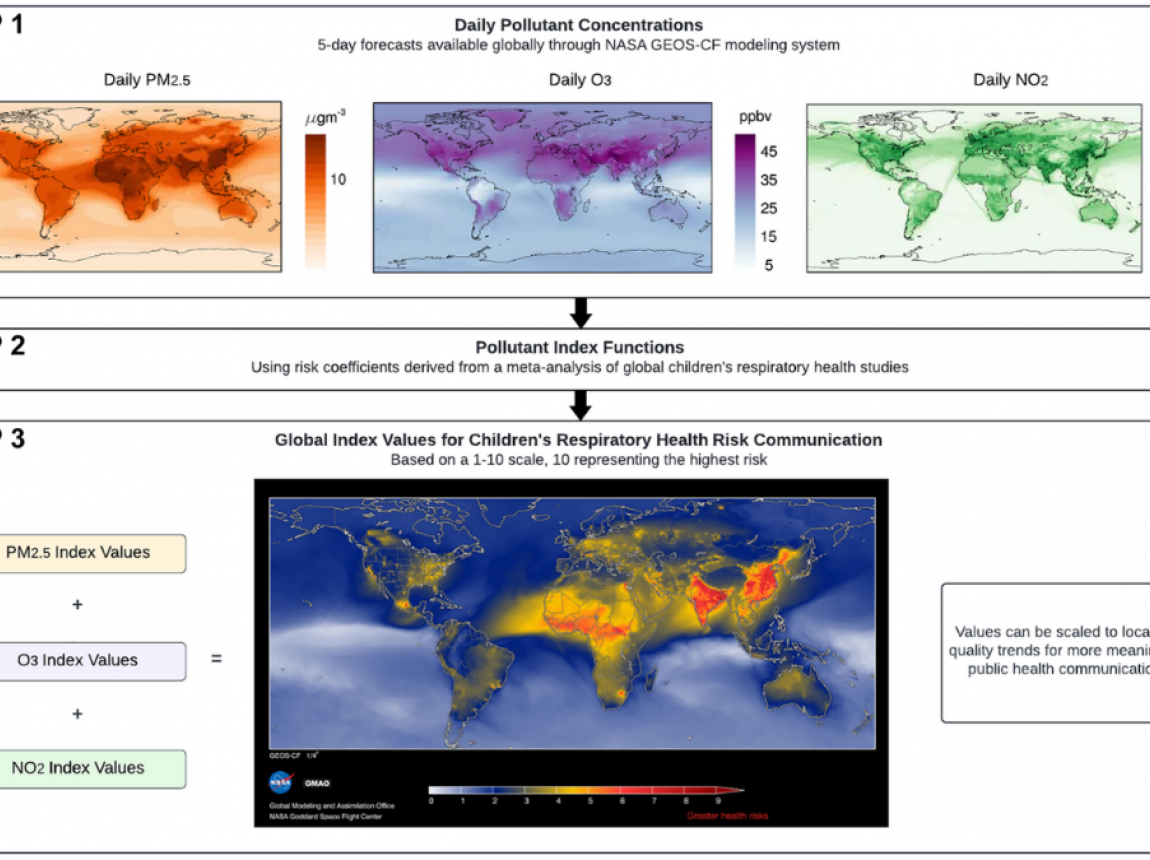
Health, Environment, and Policy Program Creates
Health Index with NASA
Case Study
/ Feb 19,2020
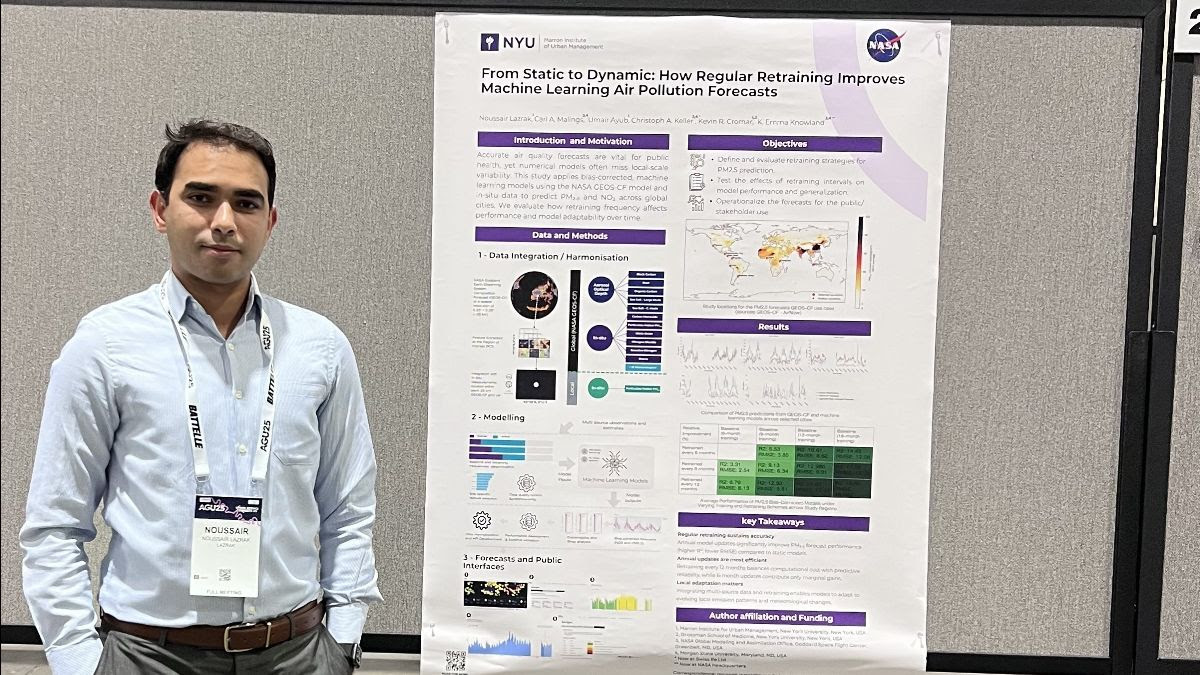
At the annual meeting of the American Geophysical Union (AGU) in New Orleans, Health, Environment, and Policy Research Scientist Noussair Lazrak presented a poster on ongoing NYU–NASA collaborative research exploring methods to improve PM2.5 air quality forecasts. The project examines how machine-learning models used in forecasting systems can experience performance changes over time as atmospheric conditions and data relationships evolve.
The work evaluates whether scheduled model retraining can help sustain forecast accuracy. Results indicate that structured annual retraining may provide meaningful improvements relative to static approaches, while more frequent updates appear to offer smaller incremental benefits.
Funded by NASA’s Satellite Needs Working Group, the research contributes to continuing efforts to develop robust, maintainable approaches for AI-enhanced air quality prediction.
Please fill out the information below to receive our e-newsletter(s).
*Indicates required.